

Articles
Management theory told through Vietnamese business problems, with MBA notes and a practical route to scholarships.
160articles in English · latest 4 November 2026
RSS in EnglishSearch and filter articles
Try a phrase such as supply chain
Frameworks and cases
Showing 145–156 of 160 articles · newest first
November 2026
12 articles on this page
Innovation is not invention: testing the breakthrough label
Under Schumpeter's definition, launching a commercial sausage counts as innovation while an unbuilt steam engine stays mere invention. Three scales covering degree of change, scope of novelty and market trajectory separate genuine risk from pitch hype before funding.
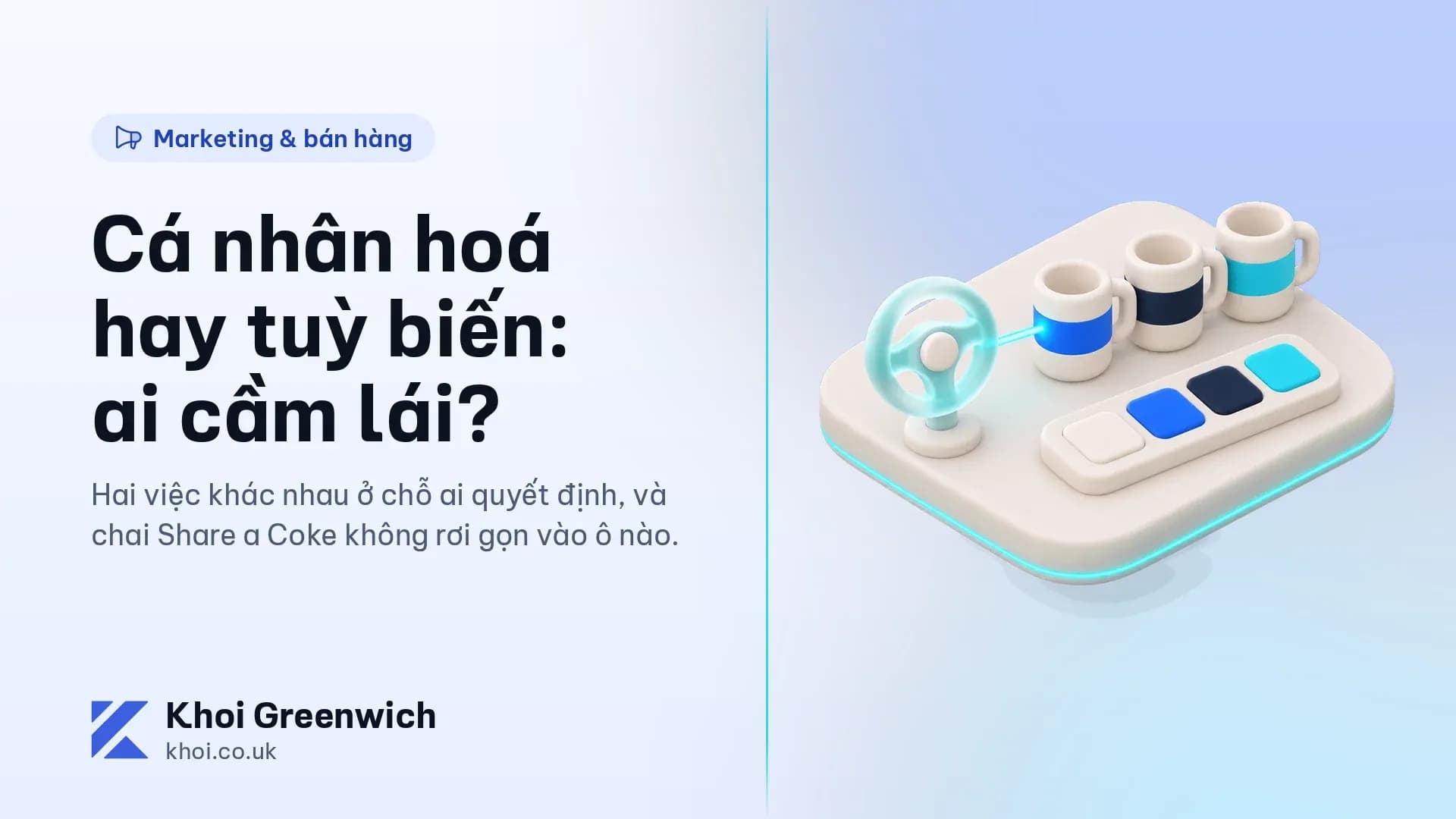
Personalisation or customisation: who holds the controls?
Netflix film rankings and Dell build-to-order configurators often get bundled together as personalisation, yet opposite sides make the choice. Separating both mechanisms, alongside a 36-SKU online coffee roastery calculation, shows why most small shops win with a simple RFM hybrid.

Born global or Uppsala steps: which path fits a Vietnamese SME?
When a first overseas buyer enquires, should a Vietnamese SME sell across multiple countries from year one or expand step by step through local agents? The right route depends on marginal replication cost, cross-time-zone support load, founder networks, and working-capital headroom.

Choosing influencers: look beyond follower counts
With 30 million VND to test a regional launch, should you book one creator with 300,000 followers or ten smaller local accounts? Agency follower brackets are convenient labels; actual return comes down to local reach, audience trust, content usage rights and internal staff hours.

Schein's Three Levels of Culture in Change Management
Why do counter staff slip back into slow approvals weeks after leadership launches a 'Customer First' campaign? Edgar Schein's three levels of culture expose contradictions between everyday forms and stated values so managers can rewire the unspoken survival rules underneath.

Uniqlo owns no factories: how does it control quality?
A sewing subcontractor quotes 11 per cent below internal factory cost, yet resident QC staff, freight and buffer stock trim the net saving to 1.9 per cent. Uniqlo's five regional production hubs, takumi specialists and SPA loop show what it really takes to hold quality without owning plants.
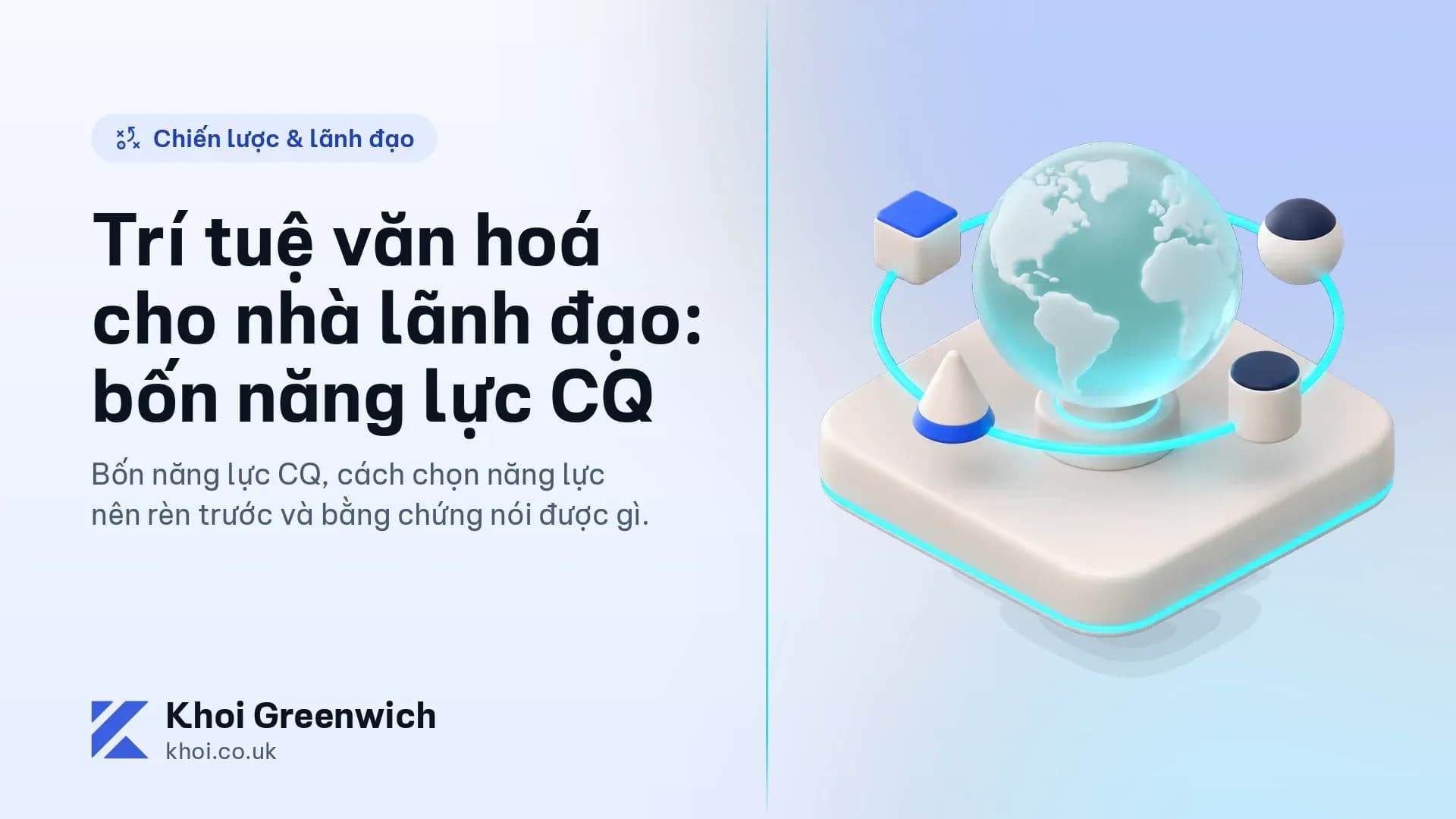
Cultural intelligence for leaders: the four CQ capabilities
Memorising country etiquette guides without testing your own assumptions carries a negative correlation (-0.10) with job performance. Drawing on a 199-sample meta-analysis, this guide breaks down the four cultural intelligence (CQ) capabilities and shows why metacognition comes first.

Cognitive load: designing a talk for the listener
Putting nine lines of figures on one slide in a twenty-minute budget pitch forces directors either to read ahead or to listen. How Sweller's (1988) working-memory model guides what belongs on screen, in speech and on a printed handout.

What does "2.7 times more likely" really mean?
An HR report warns that night-shift staff are "2.7 times more likely" to resign than day-shift staff: are you losing 20 workers or 204? Until you check the day-shift baseline rate and convert the ratio into people per 100, signing off a retention budget is pure guesswork.

Sustainable marketing is not CSR: from promise to proof
Printing a green leaf beside 'eco-friendly' on a retail pouch or landing page turns a design choice into a regulated commercial warranty. Before signing off packaging artwork or paid ads, teams must pass the CMA's six life-cycle evidence checks before applying SHIFT nudges.

Unilever and ice cream: the BCG matrix as a capital tool
Unilever spun off its €7.9bn ice-cream division despite owning five of the world's ten best-selling brands. The BCG matrix helps finance directors steer cash from mature leaders into growth lines, yet misses sub-zero cold chains and seasonal working capital.

One number or several scenarios? Scenario planning for business owners
Bank loan templates give you a single cell for projected turnover, even when export demand and border rules could swing in opposite directions. Six steps of scenario planning let business owners stress-test debt service and stage capital commitments across structurally distinct futures.
Page 13 of 14 · 12 articles per page